
Choosing wireless headphones for your phone comes down to three questions: What phone do you use? How do you actually use headphones – calls, commuting, workouts? And what’s your budget?
Most buying guides rank headphones by sound quality alone. That’s fine if you’re an audiophile, but phone users have different priorities. You need earbuds that handle calls in noisy environments, switch seamlessly between your phone and laptop, and actually fit your ears for hours at a time. The best-sounding earbuds in the world don’t help if callers can’t hear you over traffic noise.
We’ve analyzed dozens of professional reviews, user feedback from Reddit communities, and long-term durability reports to find the wireless headphones that work best for how people actually use their phones in 2026. Each pick below wins its category for specific reasons – and we’ll tell you the real tradeoffs so you can decide if they matter to you.
Best Overall: Sony WF-1000XM5

Price: $249–299 (frequently $229 on sale)
Best for: Anyone who wants excellent everything without ecosystem lock-in
The Sony WF-1000XM5 remains the earbuds to beat for most people. They deliver the clearest, most detailed sound in the true wireless category while offering outstanding noise cancellation and excellent call quality that works across both iPhone and Android.
What makes them special is versatility. LDAC codec support means Android users get hi-res audio streaming, while AAC optimization ensures iPhone users aren’t left out. The six-microphone array with mesh wind covers handles calls impressively well—reviewers note they “impressed in all conditions,” including windy streets and busy cafes.
The real catch is battery inconsistency. Some users get the full eight hours Sony promises, others need a mid-day recharge. Reports suggest firmware updates and pairing configurations affect drain rates. At this price, the variability frustrates buyers expecting Sony reliability. The touch controls also remain finicky—some users report needing two or three taps to register, while others find them oversensitive.
What Hi-Fi? captures it well: “If you’re looking for the clearest and most detailed sonic performance on the market right now, the WF-1000XM5 produce it by quite some distance.”
Runner-up: Sony LinkBuds Fit ($228) if you prioritize secure fit during activity over absolute best sound. Wirecutter chose these as their top overall pick because the hollow silicone wings actually stay put during workouts, and the always-listening voice control works across all phone platforms.
Best for iPhone Users: Apple AirPods Pro 3

Price: $249–279
Best for: iPhone owners who want seamless integration and best-in-class ANC
If you’re deep in Apple’s ecosystem, nothing else comes close. The AirPods Pro 3 deliver noise cancellation that SoundGuys declared “better than any over-ear headphones we’ve tested” – a remarkable achievement for in-ear buds. The 2x improvement over Pro 2 is noticeable on planes and trains.
Beyond raw ANC performance, the Apple integration is genuinely useful. Automatic device switching between your iPhone, iPad, and Mac works flawlessly. Find My network helps locate lost buds. The new heart rate monitoring integrates with Apple Health and Fitness+ for workout tracking. And the FDA-cleared hearing aid functionality (iOS 26+) turns them into genuine accessibility tools.
The real catch is those squeeze controls. Every reviewer complains that squeezing the stem to pause or skip shifts the earbud in your ear, requiring constant adjustment. Volume swiping is equally awkward. Apple-only users can voice-control everything, but if you use Android at work, this becomes frustrating daily. Also: there’s no true multipoint – switching only works within Apple’s ecosystem, not to Windows laptops or Android tablets.
The new foam-infused silicone tips and XXS size option finally address fit complaints from users with smaller ear canals. But the ANC is so aggressive that some users report a “pressure sensation” during extended wear – about 10-15% of users find this uncomfortable on long flights.
Runner-up: AirPods 4 with ANC ($179) if you hate the sealed in-ear feel. They’re the only open-ear design with effective noise cancellation. PCMag calls it “the best ANC we’ve experienced in an open-ear design.” The tradeoff: fit is binary – they either work perfectly for your ear shape or they’re unusable.
Best for Android Power Users: Technics EAH-AZ100
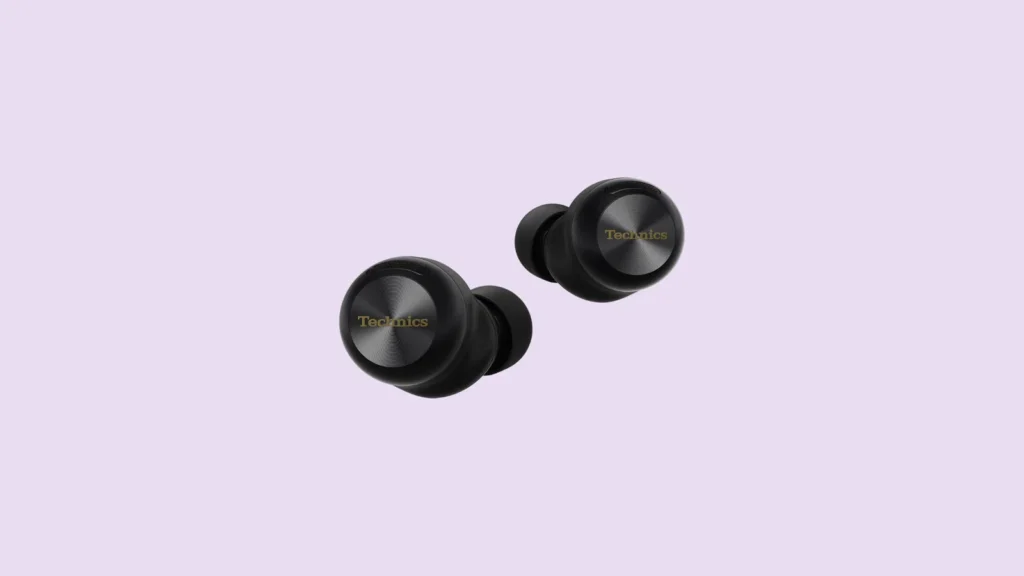
Price: $299 (often drops to $249 on sale)
Best for: Android users who want flagship features without Apple lock-in
The Technics EAH-AZ100 offers something no competitor matches: three-device multipoint connectivity. Not two devices like Sony and Bose – three. Your phone, laptop, and tablet stay connected simultaneously, and switching between them happens without manual intervention. You’re watching YouTube on your tablet, your phone rings, you answer, hang up, and YouTube resumes. For anyone juggling work and personal devices, this is transformative.
The magnetic fluid driver technology delivers audiophile-grade detail and separation that rivals wired IEMs costing twice as much. LDAC support means you’re actually hearing the hi-res audio you’re paying for on streaming services. And the 12-hour battery life – longest among flagship buds – means you’ll rarely think about charging.
The real catch is oversensitive touch controls. Reddit consensus warns they’re “prone to accidental touches” – adjusting fit or removing buds frequently triggers unwanted pause or skip commands. The deep insertion fit also causes fatigue for some users after two to three hours. And while bass response is accurate and detailed, it lacks the visceral punch that bass-heads expect from Sony.
Runner-up: Sony WF-1000XM5 ($249–299) if you prioritize absolute best ANC over multipoint flexibility, or if Technics’ touch control issues outweigh the battery and connectivity advantages.
Best for Calls and Remote Work: Huawei FreeBuds Pro 4
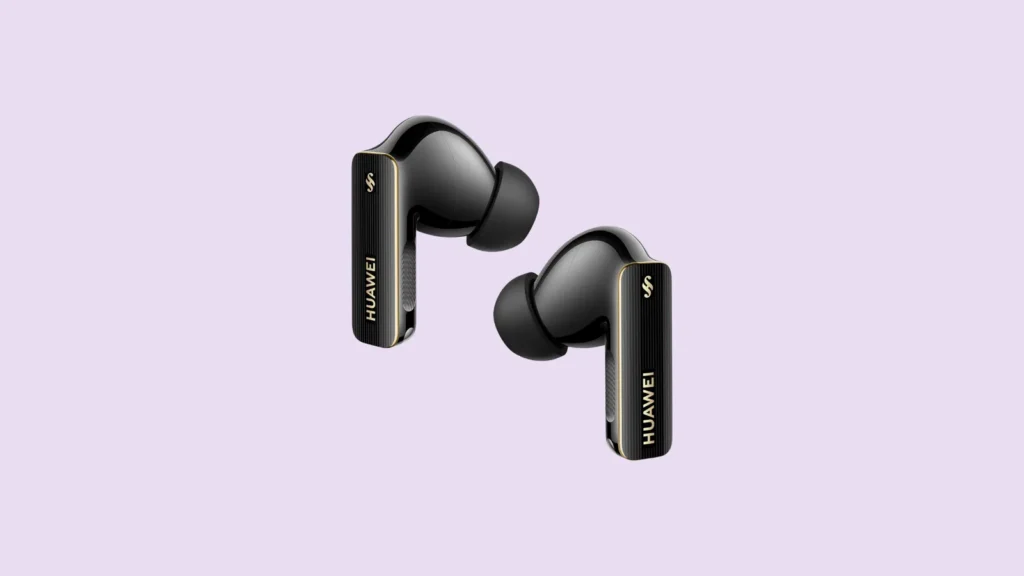
Price: $199–249
Best for: Remote workers, frequent callers, anyone in noisy environments
Most earbuds claim “good call quality.” The Huawei FreeBuds Pro 4 actually delivers it through bone conduction microphone technology that picks up voice vibrations from your skull rather than from the air. The result is remarkable: one Reddit tester walking by a busy road reported “the other person barely hears anything – it’s better than my phone’s call quality.” Colleagues will ask what headset you’re using.
Huawei claims 100dB background noise elimination, and community testing confirms it works. Traffic, construction noise, crowded cafes – the bone conduction mic isolates your voice from chaos that traditional microphones can’t handle. For remote workers who take calls from anywhere, this solves a real problem.
The real catch is ecosystem limitations. The full feature set – AI noise cancellation tuning, seamless pairing, custom EQ – requires Huawei devices or sideloading the Huawei AI Life app on Android (not available in Google Play in some regions). iPhone users get basic functionality but miss advanced features. Sound quality is also polarizing: some reviewers find the treble too bright and the bass too thin, while others say it’s fine with EQ adjustment.
Runner-up: Technics EAH-AZ80 ($199–249, the predecessor to AZ100) ranks first for phone calls on RTINGS. Voice Focus AI provides excellent noise suppression without bone conduction quirks, and it works universally without app ecosystem issues.
Best Budget Under $100: Anker Soundcore Space A40
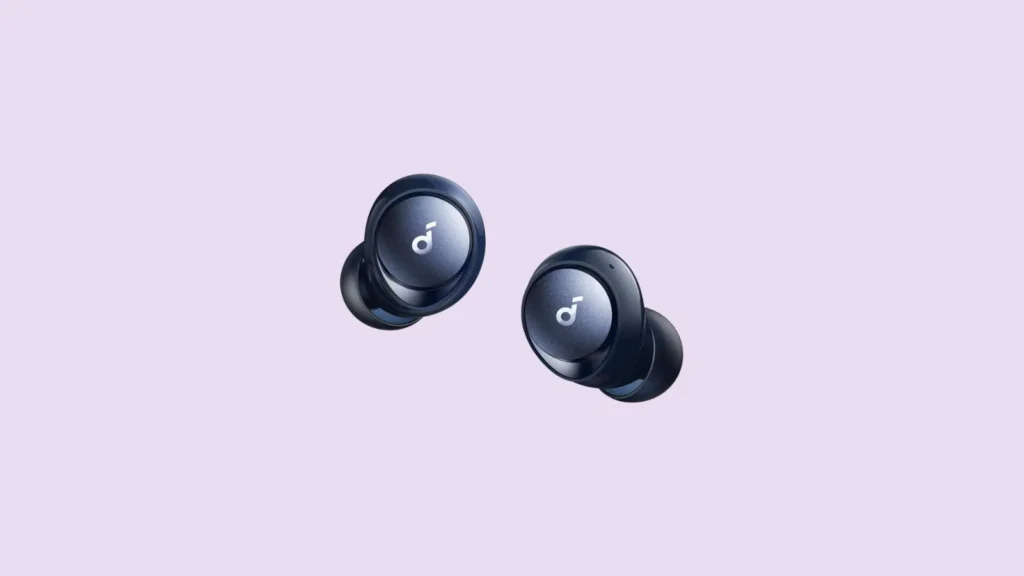
Price: $79 (frequently on sale)
Best for: Anyone who wants flagship features without flagship prices
The Anker Soundcore Space A40 packs features that cost $200+ just two years ago: LDAC hi-res codec support, adaptive ANC, ten-hour battery life, wireless charging, and fully customizable EQ. At $79, it represents the budget ANC revolution that’s reshaping what “entry-level” means.
The adaptive ANC handles airplane and train noise surprisingly well – not flagship-tier, but far exceeding expectations at this price point. Anker’s 18-month warranty also exceeds most competitors, and their customer service reputation gives budget buyers some peace of mind.
The real catch is bloated bass out of the box. Multiple reviews note the low frequencies lack definition – you can EQ it down, but it never achieves the tightness of premium drivers. The Space A40 also lacks multipoint connectivity, which is a miss when cheaper JLab options include it.
Runner-up: CMF Buds Pro 2 ($59) if you want even better ANC for less money. SoundGuys calls them “best ANC earbuds under $50.” The case doubles as a remote control (gimmicky but functional), and sound quality is surprisingly refined with more restrained bass than Anker. Tradeoff: the shape doesn’t fit small ears, and the app is buggy.
Also consider: EarFun Free 2S ($50) if you don’t need ANC. Wirecutter’s budget pick offers seven-hour battery, IPX7 waterproofing, wireless charging, and sound that “punches above its weight class.”
Best for Commuting and Travel: Bose QuietComfort Ultra Earbuds (2nd Gen)

Price: $249–279
Best for: Frequent flyers, train commuters, anyone prioritizing noise cancellation
For pure noise cancellation – especially low-frequency sounds like airplane engines, train rumble, and traffic – Bose remains the benchmark. The QC Ultra Earbuds 2nd Gen are measurably ahead of Sony in the deep bass range that dominates travel noise. The airplane cabin becomes eerily silent in a way that even excellent competitors can’t match.
The second generation also addresses the biggest weakness of the original: call quality. AI noise suppression makes voice calls “dependable” according to CNN’s testing, though improvements are incremental rather than revolutionary.
The real catch is size. These are chunky earbuds that cause fatigue in small and medium ears after two to three hours. Mark Ellis Reviews notes “the chunky design may put some people off.” Some users also report mild nausea on long flights – likely from aggressive low-frequency cancellation creating that characteristic Bose “pressure sensation.” If you have larger ears and tolerate ANC pressure well, these are excellent. Otherwise, the Sony WF-1000XM5 delivers 90% of the ANC in a more universal package.
Reddit reality check: “Call quality is fine in quiet spaces, but there’s hardly any AI-driven background noise cancellation in noisy environments.” Despite Gen 2 improvements, outdoor call quality still disappoints some users.
Runner-up: Sony WH-1000XM6 over-ear headphones ($358–400) for multi-hour flights where comfort matters more than portability. The 30-hour battery eliminates charging anxiety, and over-ear distribution of pressure prevents the ear fatigue that in-ear buds cause.
Best for Comfort and Small Ears: Google Pixel Buds Pro 2
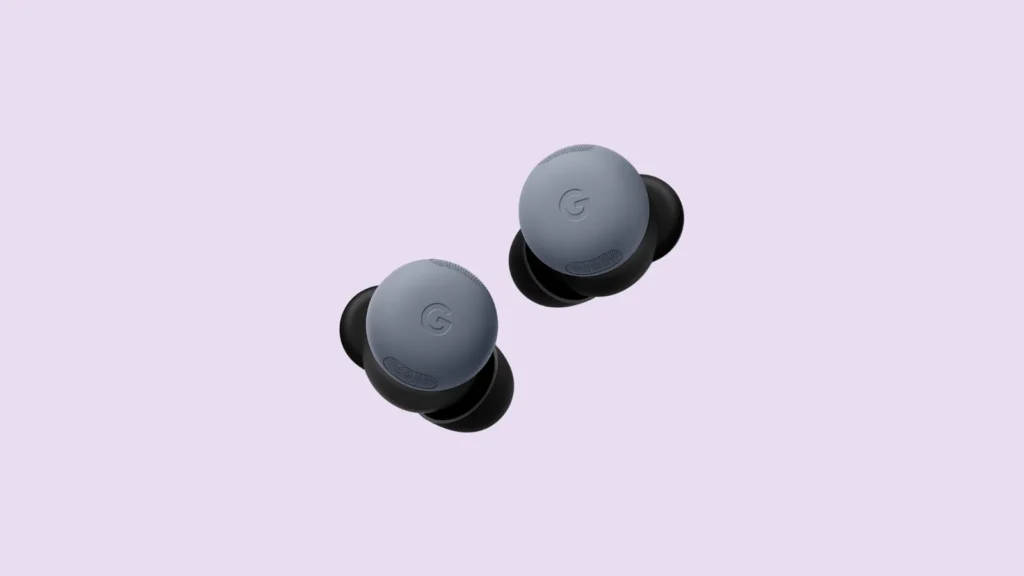
Price: $229
Best for: Users with fit issues, Pixel owners, anyone prioritizing all-day comfort
Google designed the Pixel Buds Pro 2 to be the smallest and lightest flagship earbuds on the market, and it shows. The “twist-to-adjust stabilizer fin” is a thin, flexible nub that you rotate to lock the bud in place – it’s subtle but effective, providing security without the pressure fatigue that aggressive wing designs cause.
For Pixel phone owners, the deep Gemini AI integration adds genuine utility: hands-free voice control, conversation detection that automatically switches to transparency mode when you speak, and contextual assistant responses. The transparency mode itself is “very natural, on par with AirPods Pro 2” according to multiple reviewers – a genuine strength for awareness-focused users.
The real catch is ecosystem lock-in. Custom EQ, spatial audio, Find My Device, and advanced AI features all require Pixel hardware. Android users on Samsung or OnePlus get basic functionality only. iPhone users get even less. There’s also no LDAC support – just AAC and SBC – which means Android users miss out on hi-res audio despite Google making Android.
Runner-up: Sony LinkBuds Fit ($228) if you don’t own a Pixel phone. The hollow silicone wings provide security without pressure, and Wirecutter chose them as their top overall pick for this reason. Universal compatibility means no ecosystem compromise.
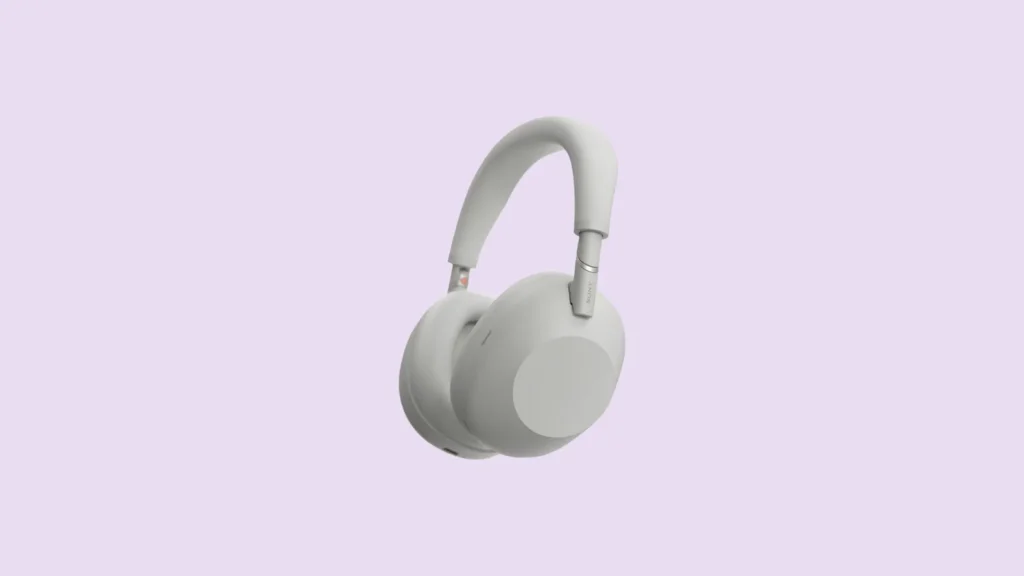
Best Over-Ear for Phone Use: Sony WH-1000XM6
Price: $358–400
Best for: Long commutes, all-day office wear, anyone prioritizing comfort over portability
There’s no close second in this category. The Sony WH-1000XM6 delivers outstanding ANC, excellent call quality with the new LC3 voice codec, 30-hour battery life, and multipoint connectivity that actually works reliably. For phone use specifically, the side tone option (hearing your own voice during calls) prevents that disconnected shouting that Bluetooth headphones often cause.
The foldable design returns after the XM5 dropped it, which matters for commuters who need headphones that fit in bags. LDAC support means Android users get hi-res audio, while the customizable app lets you tune sound signature and ANC behavior to your preferences.
The real catch is comfort regression from the XM4. Multiple Reddit threads complain about the silicon pads causing sweat and heat buildup that the XM4’s mesh fabric avoided. At 250 grams, they also feel substantial after three to four hours. If you’re coming from XM4s and loved the comfort, test these before committing.
No real runner-up: AirPods Max cost $549 for five-year-old technology with no multipoint, and Bose’s over-ear refresh hasn’t launched yet. The XM6 wins by default and on merit.
What About Wired Headphones?
If you prefer wired for your phone in 2026, solid options exist:
- Best wired overall: Moondrop Aria 2 ($80) or Chu ($20) – exceptional sound for the price, USB-C versions available
- Best with inline controls: 1MORE Triple Driver ($100) – built-in mic with iOS and Android controls
Why most skip wired: No 3.5mm jack on most phones means you need a dongle. At that point, wireless offers more features (ANC, multipoint, hands-free calls) for similar hassle.
When wired makes sense: Airplane seatback systems without Bluetooth, audiophile listening with a USB-C DAC, zero-latency gaming, or sustainability concerns (wired lasts 5-10 years versus 2-3 for wireless due to battery degradation).
Frequently Asked Questions
Do I need to match my earbuds to my phone brand?
Not necessarily, but you’ll lose features if you don’t. AirPods Pro 3 work on Android but lose spatial audio, Find My, automatic device switching, and the hearing aid features. Galaxy Buds 3 Pro work on iPhone but lose the seamless Samsung switching and full app functionality. Sony and Technics work equally well on any platform – they’re the safe cross-platform choices.
What’s multipoint, and why does it matter?
Multipoint lets earbuds connect to two (or three, for Technics) devices simultaneously. You’re working on your laptop, your phone rings, you answer without touching anything – then hang up and your laptop audio resumes. For anyone who uses both phone and computer, it’s genuinely useful. Watch out for “ecosystem multipoint” from Apple and Samsung that only works with their own devices – that’s device switching, not true multipoint.
How long do wireless earbuds actually last?
Expect two to three years of good battery life, then noticeable degradation. By year three, most earbuds hold 60-70% of original capacity. Premium brands like Sony and Apple tend to maintain capacity longer than budget options. If longevity matters, over-ear headphones (replaceable ear pads, larger batteries) last five-plus years, and wired headphones can last a decade.
Which earbuds are best for phone calls specifically?
Huawei FreeBuds Pro 4 for challenging environments (traffic, wind, crowds) – the bone conduction mic genuinely works. Technics EAH-AZ80 or AZ100 for more universal compatibility. Sony WF-1000XM5 for all-around reliability. Avoid Bose QC Ultra if calls in noisy outdoor environments matter – despite Gen 2 improvements, they still struggle there.
Are expensive earbuds worth it over budget options?
For sound quality? Diminishing returns above $150. For call quality and ANC? The gap remains significant. Budget earbuds like the CMF Buds Pro 2 ($59) now deliver ANC that rivals $150 models from two years ago, but microphone quality and noise suppression during calls still favor premium options. If you take lots of calls in noisy places, the $200+ earbuds justify their price. If you mostly listen to music in quiet environments, budget options are surprisingly good.