


Motorola Moto G (3rd Gen)
Verdict
Key specs
Critic consensus

“Motorola again delivers a good mid-range smartphone with its new Moto G, which convinces with strikingly good key features. The battery life and primary camera are really good, and are looking for their match in this price range. The HD screen is also appealing. However, some aspects have been neglected slightly for the price of starting at 249 Euros. The storage is quite tight, and the memory expansion options are limited. In particular, the Lumia 640 (starts at 159 Euros) does a much better job here. Other manufacturers, such as ZTE in its Blade S6, offer a 16 GB flash memory straight away. This option costs extra in the Moto G, but that also involves one more gigabyte of working memory. We recommend investing the additional 30 Euros because storage frustration will otherwise quickly evolve.”

“The Moto G is probably the most important phone Motorola makes. The Moto X is a good halo model and this year’s looks even better than last year’s, but the market has been unkind to high-end Android phones for the last couple of years. The Moto E is respectable, but it cuts more corners and isn’t all that much cheaper than the Moto G. In Motorola’s lineup, the G represents the best value for the price (and as intrigued as we are by the midrange Moto X Play, we won’t be getting it in the US). And that’s the place it occupies in the wider Android ecosystem, especially in countries where Xiaomi isn’t selling phones. Like the other Moto Gs, it does a few things pretty well and it does nothing particularly badly. We could wish for better graphics performance, a more satisfying camera, and a more striking screen. But the new version of the Moto G is enough of a step up that it’s a great upgrade for users of dumbphones, old Android phones, and even first-generation Moto G buyers. That said, we'd strongly recommend purchasing the $220 model—16GB of internal storage is more comfortable for files and apps, but the extra gigabyte of RAM is an even bigger improvement that you can't solve with an SD card. The fact that the Moto G is so competent drives home the superfluousness of so many flagship phone features—the move from 720p to 1080p to 1440p and beyond, faster SoCs, ever-thinner metal-and-glass slabs. Those things are all nice to have, but you’d be hard-pressed to argue that any of them are essential.”

“With so many rivals vying to steal the Moto G’s thunder these days, we reckon that the latest generation of the smartphone won’t have a cakewalk in its segment. However, by adding beefier hardware, IPX7 rating, and Moto Maker to the product family, Motorola has done plenty to keep the newcomer in the mix. Therefore, we believe that once again, the new Moto G will deservedly be one of the top choices in its price range.”

“Of course, the Moto G isn’t for everyone, but it strikes that perfect balance of value, design, and performance – while still staying true to the foundational principles of the series. There’s a reason why the Moto G series is constantly a mainstream, it just keeps on getting better. And obviously, we continue to see that with this latest iteration. Power users might not take fancy in this phone, but it still generates a broader appeal. Don’t underestimate the intensity of what it offers!”
Watch before you decide

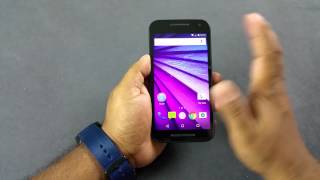



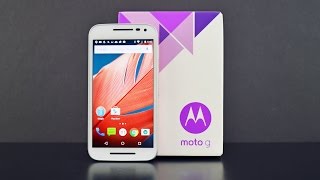

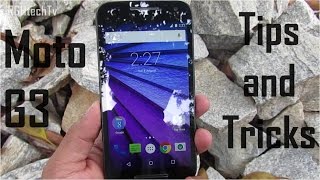


In Depth
Motorola proved with the Moto G 2 that budget phones could offer excellent hardware at a low cost. The company continues this tradition with the Moto G 3. At half the cost of premium smartphones, the Moto G 3 offers plenty of bonus features even flagship phones don’t offer such as an IPx7 rating, which means it can be submerged in water for up to half an hour. As with the Moto X range, users can fully customize their phone with the Motorola’s Moto Maker service. The phone itself features an all-plastic trim with curved corners and a curved rear. Instead of the soft-touch back of its predecessor, Motorola went for textured plastic for the Moto G 3 giving critics more of a grip. Despite the positives, Tech Radar describes it as a “chunky, largely plastic phone” though they add it is “perfectly fine.” Other experts agree with this assessment and add that although it certainly feels cheap due to the plastic body it has a solid build quality.
The one thing Motorola did not upgrade for the Moto G 3 is the screen. It sports the same 5-inch, 720p display as its predecessor, leading to a relatively low pixel density of 294ppi. Still, critics were fairly satisfied with the screen overall as it provides accurate and bright colors. With that said they found overall viewing angles and sunlight legibility fairly average with Greenbot adding, “The display has a propensity to be a bit too bright at night, which can contribute to some serious eye strain.”
The Moto G offers two different setups: 8GB of internal storage with 1GB of RAM or 16GB of internal storage and 2GB of RAM. Naturally the one with the higher storage and RAM ends up costing more than the base version. Both models come with a 1.4GHz quad-core processor and mid-level graphics processer. In general, reviewers describe the performance of both models as “zippy” though they did find the 16GB version to be slightly faster in comparison. The biggest selling point of the Moto G 3 isn’t its performance, it is the battery life. The 2,470mAh battery provided experts with a full day of battery life with moderate usage and around 2 days of very light use. While the back cover of the phone is removable, the battery itself is not.
Another big upgrade for the Moto G 3 is the 13-MP main camera. When compared to camera on the Moto G 2, critics saw a marked improvement in picture quality. In good lighting situations they were able to capture images with good detail and vibrant colors, especially in HDR mode. It does not come with optical image stabilization so they unfortunately ended up taking a lot of slightly blurry photos. The problem became especially obvious when they took low light pictures. Not only did they have problems with the focus, the noticed pictures also had a lot of digital noise. Besides the main camera, it also upgraded the front camera to 5MP.
Overall, reviewers still consider the Moto G 3 the best smartphone for its price. Android Authority states, “The many positives of this handset definitely outweigh…the shortcomings in the display and camera.” Wired adds, “The Moto G punches above its weight in almost every way…It’s the clearest indication yet of the great things to come from truly affordable phones.”
What people actually want to know
When was the Motorola Moto G (3rd Gen) released?
The Motorola Moto G (3rd Gen) was released on July 29, 2015.
How long does the battery last on the Motorola Moto G (3rd Gen)?
The Motorola Moto G (3rd Gen) has a 2,470 mAh battery.
Does the Motorola Moto G (3rd Gen) have a headphone jack?
Yes, the Motorola Moto G (3rd Gen) has a 3.5mm headphone jack.
Does the Motorola Moto G (3rd Gen) have NFC?
No, the Motorola Moto G (3rd Gen) does not have NFC. Contactless payments and tap-to-pair will not be available.
Where can I get support for the Motorola Moto G (3rd Gen)?
Visit Motorola's official support page for warranty info, repairs, and troubleshooting.
Where can I download the Motorola Moto G (3rd Gen) manual?
You can view and download the Motorola Moto G (3rd Gen) manual on our dedicated manual page.
Questions & answers
Loading answers…
Loading answers…
✓ Question submitted. We'll notify you when someone answers.
We sent a verification link to . Click it to publish your question.
Can't find it? Check your spam folder.
Finish the security check above to post your question.
Your name shows with your question.
How it compares


New phones, honest scores.
One email when something worth knowing changes. No deal spam, no filler.
Hi Durgesh. Try applying some force around the camera area of the phone. Let me know if that works.