
Best prepaid cell phone plans
Prepaid plans you pay for up front: no contract, no credit check, no surprise overage. They run on the same towers as the big carriers, and we compare every one at its true monthly cost, taxes and fees included.
Try removing a filter or
Cell phone plans compared


Also shopping for a phone?
Browse phones & reviews
Every phone reviewed and ranked by our editors. Find the right one, then come back and pick your plan.


Save with a certified refurbished phone
Same phone, $300 less. We compare every certified seller — Back Market, Amazon Renewed, and eBay Certified — in one place.


Browse carriers by network
The cheapest carriers run on the same towers as the Big 3. Pick a network, see everyone on it.
The US has three national networks, run by Verizon, T-Mobile, and AT&T. Most other carriers, including budget brands, operate on one of them, so the geographic coverage you get depends on the network, not the brand name on your bill.





Carriers on the same network share the same towers, so where you get signal matches. What differs: data priority when a tower is congested, perks, and customer support. We note these on every plan card.
Switching from your current carrier?
Not sure where to start?
Our team breaks down the plans worth considering across every network, budget, and use case.

How to choose a prepaid plan
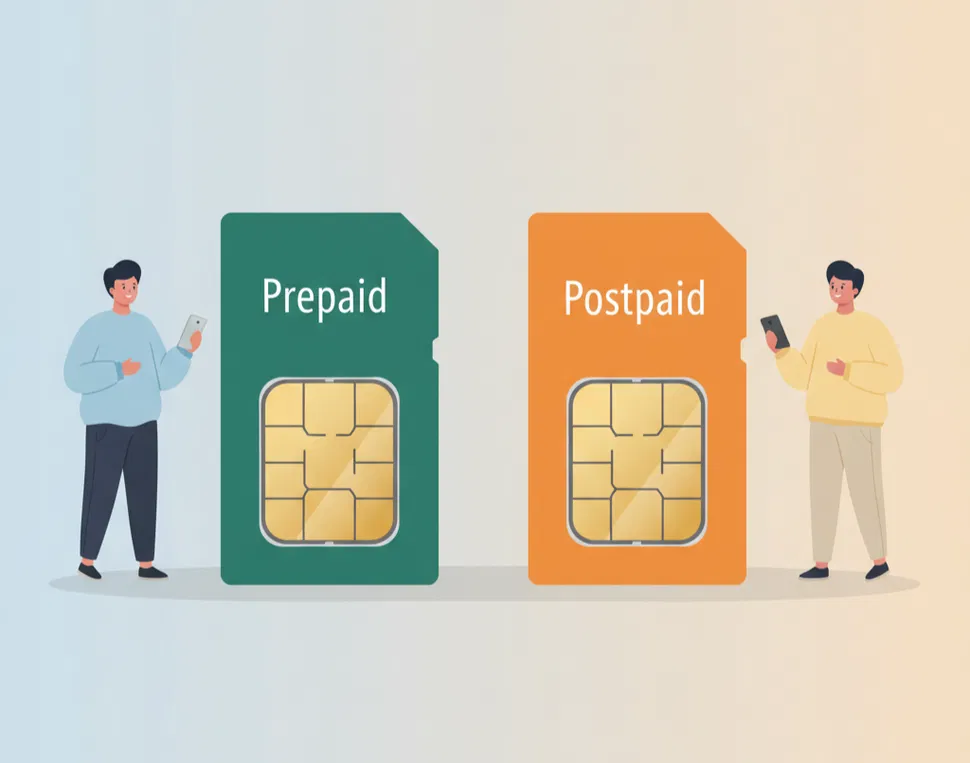
Prepaid has shed its old reputation. The plans run on the same towers as the big carriers, and for most people they cost a lot less. But "prepaid" hides a few details worth understanding before you switch, and they're not the ones the ads talk about. Here's what actually shapes the decision.
This is the first thing most people worry about, so it's worth saying plainly: prepaid plans run on the same physical networks as the major carriers. A prepaid plan on a given network reaches signal in the same places the carrier's own plans do. What you give up isn't coverage. It's a few things further down this list, and for most people the trade is well worth the savings. If your fear is that cheaper means worse signal, set it aside. The map is the same.
Prepaid is cheaper for reasons, and they're worth knowing. The main one shows up only when a tower is busy: prepaid traffic is usually lower priority than the carrier's own customers, so in a crowded place at peak time your speeds can dip even on an "unlimited" plan. You may also get fewer perks, little or no in-store support, and usually no option to pay off a phone in monthly installments. None of that affects everyday use for most people. But if you're often in dense, congested places, or you want a hand at a store counter, weigh it before you switch.
The lowest prepaid prices increasingly come with a catch: you pay for a full year up front. That's still genuinely no contract, in that nothing forces you to renew, but the savings are tied to the upfront commitment. If you might leave partway through, check whether the carrier refunds unused months, because many don't. Month-to-month prepaid is the truly flexible option, and it usually costs a bit more. Decide which you're actually buying before the lowest sticker price pulls you in.
Most prepaid plans expect you to bring a phone you already own, which is part of why they're cheap. Usually that's simple: your phone needs to be unlocked and compatible with the network the plan runs on. Newer phones often support an eSIM, so you can activate online the same day with no physical SIM to wait for. The catch is that not every phone supports every network's bands equally, so a quick compatibility check before you commit saves a lot of grief later.
Many prepaid carriers advertise a low introductory rate that rises after the first few months, or that's only offered to new customers. Before you commit, find the price you'll pay once that intro period ends. The plan with the lowest opening rate isn't always the cheapest over a year. Compare the prices you'll actually be paying in month six, not just month one.
Yes. That's one of the main draws of prepaid. Because you pay before you use the service rather than getting billed after, there's no credit check to sign up, and no contract to qualify for. This makes prepaid a straightforward option if you're new to the country, rebuilding credit, or just don't want a hard inquiry on your report to get a phone plan.
Yes, in terms of where you get signal. Prepaid plans run on the same physical networks as the major carriers, so geographic coverage matches. The difference shows up only when a tower is congested: prepaid traffic is often lower priority than the carrier's own customers, so your speeds can slow in a crowded place at a busy time. Everywhere and every time else, the experience is the same.
Not always. "Unlimited" means the data won't be cut off, but most plans slow down after a monthly threshold, and prepaid data is more likely to slow during congestion because it's lower priority on the network. For most people, on most days, this never bites. If you're a heavy data user or you're regularly in crowded places at peak hours, check the plan's priority and slowdown terms before choosing.
It depends on the carrier, so check before you commit. The lowest prepaid prices often require paying for a full year at once. Some carriers refund or credit the unused months if you leave early, and many don't. It's still no contract, in that nothing forces you to stay, but the money is already spent. If there's any chance you'll switch partway through, either confirm the refund policy or choose a month-to-month plan instead.
Usually, yes. Most prepaid plans are built around bringing your own phone. Your phone needs to be unlocked and compatible with the network the plan runs on. Newer phones often support an eSIM for same-day online activation with no physical SIM. The one thing worth checking first is that your specific phone supports the network's bands, since compatibility can vary by model.
Yes. You can bring your existing number to a prepaid plan the same way you would to any other plan. Start the switch from the new carrier, and keep your old account active until the transfer finishes, so the number doesn't get dropped mid-move. The process is routine, though it can take anywhere from a few minutes to a couple of days.
That depends on the plan. On an unlimited plan, you keep going at reduced speed once you pass the monthly full-speed threshold. On a capped plan, you'll either be slowed, blocked until you add more, or charged for additional data, depending on the carrier. Because there's no monthly bill that can balloon, prepaid won't surprise you with overage charges the way a postpaid plan can. Check which model your plan uses so you know what to expect.
Often, but not always, which is why it's worth checking twice. Two things can change it: an introductory rate that rises after the first few months, and annual pricing that's cheaper per month only if you pay the whole year up front. On top of that, taxes and fees vary. We show the all-in estimate on every card so the price you compare is closer to the price you'll actually pay, but always confirm what the rate becomes after any intro period ends.
You can absolutely run a family on prepaid. Some prepaid carriers offer multi-line discounts, and others price each line the same whether you have one or four. Because there's no shared-account contract, prepaid family setups are more loosely joined than a postpaid family plan, which can be a plus or a minus depending on how you want to manage it. Compare the per-line cost across the lines you actually need, since the math changes with line count.
There usually is one, and it's worth knowing rather than fearing. The very lowest prices typically come with one or more of these: lower priority when a tower is busy, a price that's only good for new customers or for the first few months, or a requirement to pay for a full year up front. None of these make a cheap plan a bad deal. They just mean the headline number isn't the whole story, so read what's attached to it before you sign up.
Carriers can't pay for a better ranking.
To ensure accuracy, this page has been reviewed and fact-checked by Carl Perlas, Jon Stone and Branden S. as part of our editorial review process. Learn how we score.