
Best postpaid cell phone plans
Postpaid plans billed monthly, with the priority data and premium perks the major carriers are known for. Every plan shown at its true all-in cost, so you can see what the premium actually buys.
Try removing a filter or
Cell phone plans compared


Also shopping for a phone?
Browse phones & reviews
Every phone reviewed and ranked by our editors. Find the right one, then come back and pick your plan.


Save with a certified refurbished phone
Same phone, $300 less. We compare every certified seller — Back Market, Amazon Renewed, and eBay Certified — in one place.


Browse carriers by network
The cheapest carriers run on the same towers as the Big 3. Pick a network, see everyone on it.
The US has three national networks, run by Verizon, T-Mobile, and AT&T. Most other carriers, including budget brands, operate on one of them, so the geographic coverage you get depends on the network, not the brand name on your bill.


Carriers on the same network share the same towers, so where you get signal matches. What differs: data priority when a tower is congested, perks, and customer support. We note these on every plan card.
Switching from your current carrier?
Not sure where to start?
Our team breaks down the plans worth considering across every network, budget, and use case.

How to choose a postpaid plan
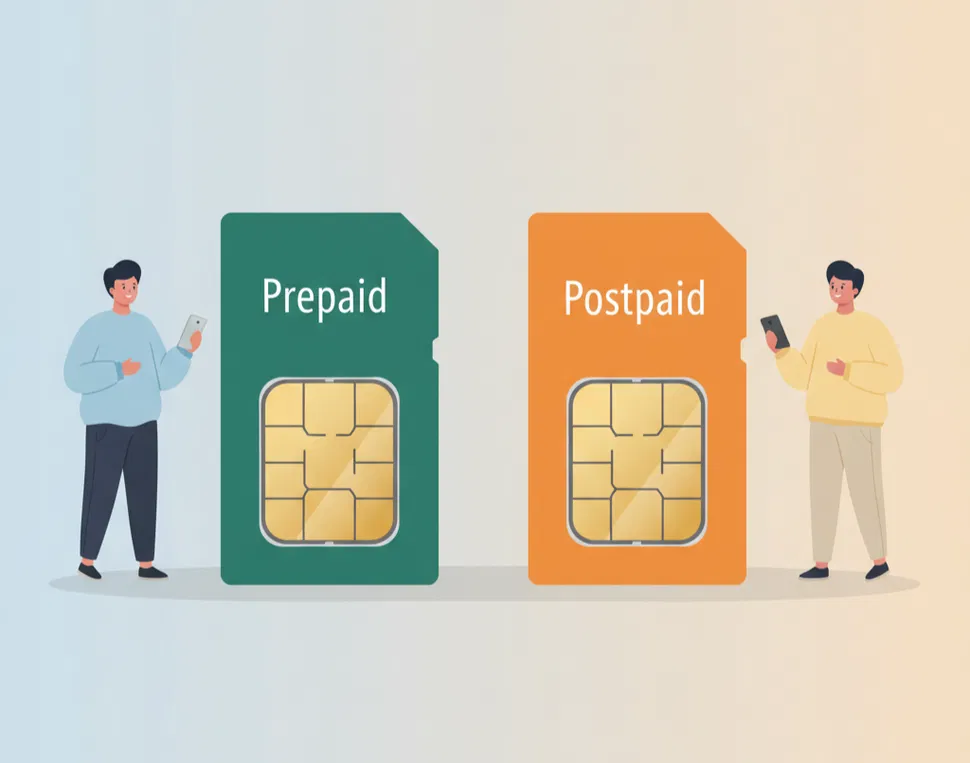
Postpaid costs more than prepaid, and most people who choose it know that. What you're paying for is a bundle: priority on the network, the option to finance a phone, perks like streaming and roaming, and the convenience of a single bill. The question isn't whether postpaid is pricier. It's whether what you get back is worth it. Here's how to judge that.
This is the most important thing to understand about postpaid. When a carrier offers a phone for "free," or heavily discounted with trade-in, that discount almost always arrives as credits spread across your bill over two to three years, not money off at the register. You're financing the phone, and the carrier stops the remaining credits if you leave early. In many cases, even changing your plan partway through can void what's left. The deal can be real and worth taking, but it ties you to that carrier, and often to that specific plan, for the full credit period. Go in knowing that.
Within a single carrier's lineup, "unlimited" plans differ in the way that matters most: how much full-speed data you get before you're moved to lower priority on the network. Cheaper tiers give you a smaller amount of that high-priority data; premium tiers give you more, or lift the limit entirely. The word "unlimited" sits on all of them, but the experience in a busy place isn't the same. When you compare two unlimited plans, the real difference is usually here, not in the headline.
Carriers now advertise price guarantees, and they're worth understanding rather than taking on faith. A typical guarantee covers your base plan rate. It generally doesn't cover taxes, fees, surcharges, perks, or promotional pricing, all of which can still move. It may also apply only to certain plans, so an older one you're already on might not be included. A price lock is a real benefit, but read what it covers before you let it sway you, and check whether your plan actually qualifies.
Higher postpaid tiers bundle in extras: streaming subscriptions, roaming, hotspot data, device protection. These can genuinely offset the higher price, but only for services you'd otherwise pay for yourself. A streaming service you already subscribe to, now included, is real money saved. A bundle of things you'd never touch is just a higher bill. Add up what you actually pay for today, then see whether the tier's perks cover enough of it to justify the step up. Do that math before the perk list does the selling.
A postpaid plan with a "free" phone looks cheaper month to month, but the deal commits you for two to three years. Before you choose, add it up across the whole credit period: the monthly plan cost, minus the device credits, for as long as you're locked in. A plan that looks pricier each month can come out cheaper over the life of the phone, and one that looks like a steal can cost more once you can't leave.
Not in the old sense. Most postpaid plans have no annual service contract, so you can cancel the service itself anytime. The commitment comes from the phone. If you financed a device, or took a "free phone" deal, you're tied to paying it off, and to keeping the qualifying plan, until the credit period ends. So the service has no contract, but the device terms can create a similar lock-in. Know which one you've signed up for.
The phone's cost is spread across your bill as monthly credits over two to three years, rather than taken off the price up front. Each month, a credit cancels out that month's device payment, so it nets to "free" only if you stay the full term. Leave early and the credits stop, while the rest of the phone's balance becomes yours to pay. In many cases, switching to a different plan partway through cancels what's left too. It's a real discount, but it's a multi-year commitment.
You'll owe the rest of the phone. With a financed device, leaving early stops any remaining credits and leaves you responsible for the outstanding balance. That's what keeps "free phone" deals tied to one carrier. If you're thinking about switching, check how much of the device balance is left first, since that's the real cost of leaving, not just the new plan's price.
Premium data is the portion that stays high priority on the network. Once you use it up, you're still "unlimited," but your traffic drops to lower priority, so you may slow down when a tower is busy. Different tiers include different amounts of premium data, and that's the real distinction between a cheaper and a pricier unlimited plan from the same carrier. For most people the standard amount is plenty; heavy users should look at how much premium data each tier includes.
Yes, on the same network. When a tower is congested, the carrier's own postpaid customers are generally served ahead of prepaid traffic, so postpaid tends to hold its speed better in crowded places at peak times. Everywhere else, the two are effectively the same. This priority is part of what the postpaid premium buys, and it matters most if you're regularly somewhere busy.
They're real, but narrower than they sound. A typical guarantee holds your base plan rate steady for a set period. It usually doesn't cover taxes, fees, surcharges, perks, or promotional rates, all of which can still change. It may also apply only to specific newer plans, so being on an older one can leave you out. Treat it as a genuine but limited protection, and confirm both what it covers and whether your plan qualifies.
Only if you'd use them. The extras bundled into higher tiers (streaming, roaming, hotspot, device protection) offset the price only for services you'd otherwise pay for separately. If a bundle includes something you already subscribe to, that's real savings. If it's full of things you'd never use, it's just a bigger bill. Total up what you currently pay for on your own, then check whether the bundle covers enough of it to justify the higher tier.
Maybe not, so check before you do. Many "free phone" deals require you to stay on a qualifying plan to keep the device credits. Dropping to a lower tier can cancel those credits, which means the phone you thought was free suddenly isn't. If you want to lower your bill while a device deal is still running, confirm with the carrier first whether the specific change you're making keeps the credits intact.
Some do, and it's become a real point of difference. A growing number of plans now include satellite texting, which lets a compatible phone send messages where there's no cell signal, while others offer it as a paid add-on or not at all. When it's included, it tends to be on the higher tiers. If staying reachable off the grid matters to you, check whether a given plan covers it, since this is one area where otherwise similar plans now diverge.
More than the advertised price suggests, and a price lock usually won't shield them. On top of the base rate, expect carrier recovery fees and government taxes that vary by state, which together can add a noticeable amount per line. This is exactly the gap a price guarantee tends not to cover. We show an all-in estimate on every card, so the figure you compare is closer to what you'll actually pay, but your final bill still depends on where you live.
Carriers can't pay for a better ranking.
To ensure accuracy, this page has been reviewed and fact-checked by Carl Perlas, Jon Stone and Branden S. as part of our editorial review process. Learn how we score.